
Clay County Busted Mugshot Records
Every busted booking in Clay County runs through the jail. The Sheriff's Office operates it. The facility is also called the Detention Facility. Green Cove Springs and Orange Park have their own police departments, but CCSO ends up with the booking sheet. Keystone Heights has no police force of its own. It leans on CCSO for law enforcement. That split matters. A city incident report and a county booking record are related files held by separate offices, so knowing which agency made the arrest tells you where to look first.
The booking entry links a person's name to the arresting agency, the time of booking, the charges, bond information, and custody status. A frontal booking photo may be taken for identification. Whether that image appears online depends on the individual record in the P2C system and any legal redaction. A blank photo space does not mean no picture exists. You can ask CCSO for it directly.
Clay County Booking Record Fields
Think of the P2C summary as an access copy, not a full case file. Open the person detail. Write down the identifiers. Those numbers connect an arrest record to a records request and to any later court search. Exact fields shift with the live interface and legal limits. Similar names trip people up. Never merge two entries without checking dates, agencies, and record numbers side by side.
| Field | What it means |
|---|---|
| Name and descriptors | Identity details and aliases when public; use them to separate people with similar names. |
| Booking or arrest number | The key identifier for one intake event and the best reference for a focused request. |
| Arrest and booking time | Related dates that may differ, especially after a late-night arrest. |
| Arresting agency | The office that made the arrest, which may differ from CCSO as jail custodian. |
| Charges and offense codes | Charges recorded at intake, not the prosecutor's final filing or a disposition. |
| Bond information | Release terms recorded at that point; bond is not a fine or judgment. |
| Case or court data | Identifiers and dates that help match the booking to the Clay Clerk docket. |
| Custody and photograph | Current status and an intake image when CCSO makes one available. |
Charges are not fixed. One can be declined, amended, combined, or dismissed, and some resolve through a plea or a trial. Dates drift as well. The arrest date, offense date, filing date, and disposition date can each fall on a different day. So don't panic when the jail screen and the court screen disagree at first glance. Those gaps are normal.
- Booking
- Jail intake that creates the custody record after an arrest or lawful commitment.
- Bond
- A release condition set before the case ends, not a fine or finding of guilt.
- Disposition
- The court result, such as dismissal, plea, acquittal, or judgment.
- Expunction
- A court-ordered process that generally destroys or obliterates qualifying records, subject to limited statutory retention.
Request Clay County Busted Records
Sometimes the P2C result is missing, the photo will not load, or the date range comes up short. When that happens, use the CCSO public-record request channel. Florida lets you ask anonymously and generally demands no reason. Keep the wording narrow. Specific details let the Public Records Section pull the right intake fast instead of digging through a whole database.
- Record the full name, likely booking date, arresting agency, and booking or arrest number shown by P2C.
- Ask for the releasable booking sheet and booking photograph tied to that one event. State that electronic delivery is preferred.
- Request a cost estimate before charges exceed a limit you choose, particularly if several events or broad date spans are involved.
- Keep the response, any redaction notice, and its exemption citation with the record. Follow a custodian referral to the named office.
Attn: Public Records Section
901 North Orange Avenue
Green Cove Springs, FL 32043
904-529-6090
A city incident report travels a different path. Green Cove Springs police records stay with the city, and Orange Park's stay with the town. CCSO keeps the county booking sheet and intake photo. The Clerk holds the court file. One record in hand does not close the door on the rest.
Clay County Booking Photo Fees
CCSO posts a fee sheet with a set price for booking photographs. That beats a vague warning that costs may apply. The sheet was revised in 2021, so ask for a fresh estimate before placing a big order. Florida law requires prompt acknowledgment and a good-faith response. Even so, no fixed number of business days is promised for every photo request.
- Booking photograph
- $0.15 per page.
- Incident, CAD, or traffic-homicide report
- $0.15 per page plus redaction time.
- Certified copy
- $1 per page.
- Work taking more than 30 minutes
- An estimate based on $15 per hour plus copies; other personnel may be billed at their hourly rate.
If the posted schedule changes, the current CCSO fee sheet controls. Note: a portal record without a photo is not a formal denial of access.
Florida Busted Mugshot Removal Law
Florida's Constitution and chapter 119 open most government records to the public, subject to exemptions and redaction. Broad access does not force an agency to post everything online. A separate law regulates covered commercial booking-photo publishers. It is Florida Statutes section 901.43. Under it, a covered publisher may not charge for removal. A qualifying request goes by registered mail to the publisher's registered agent, carries enough identity proof, and names the exact photograph. The publisher must then remove it free within ten calendar days of receipt.
The statute has limits. It does not erase every sheriff page or news article. It targets publishers that take removal payments or mainly profit from booking photos. Busted Newspaper, Recently Booked, Mugshots.zone, and Mugshots.com each state a free correction or removal route for certain documented outcomes or errors. Follow the current policy on the site that controls the live page. Arrests.org's free process could not be verified. Assume nothing there.
Once a source removes or changes a page, Google's Refresh Outdated Content tool can nudge an old search result. It cannot touch a live source. Keep your paperwork. Court orders, disposition records, request receipts, and the exact page or image address all help later.
The official law page shows the operative text. The Florida Legislature's booking-photo statute is pictured below.
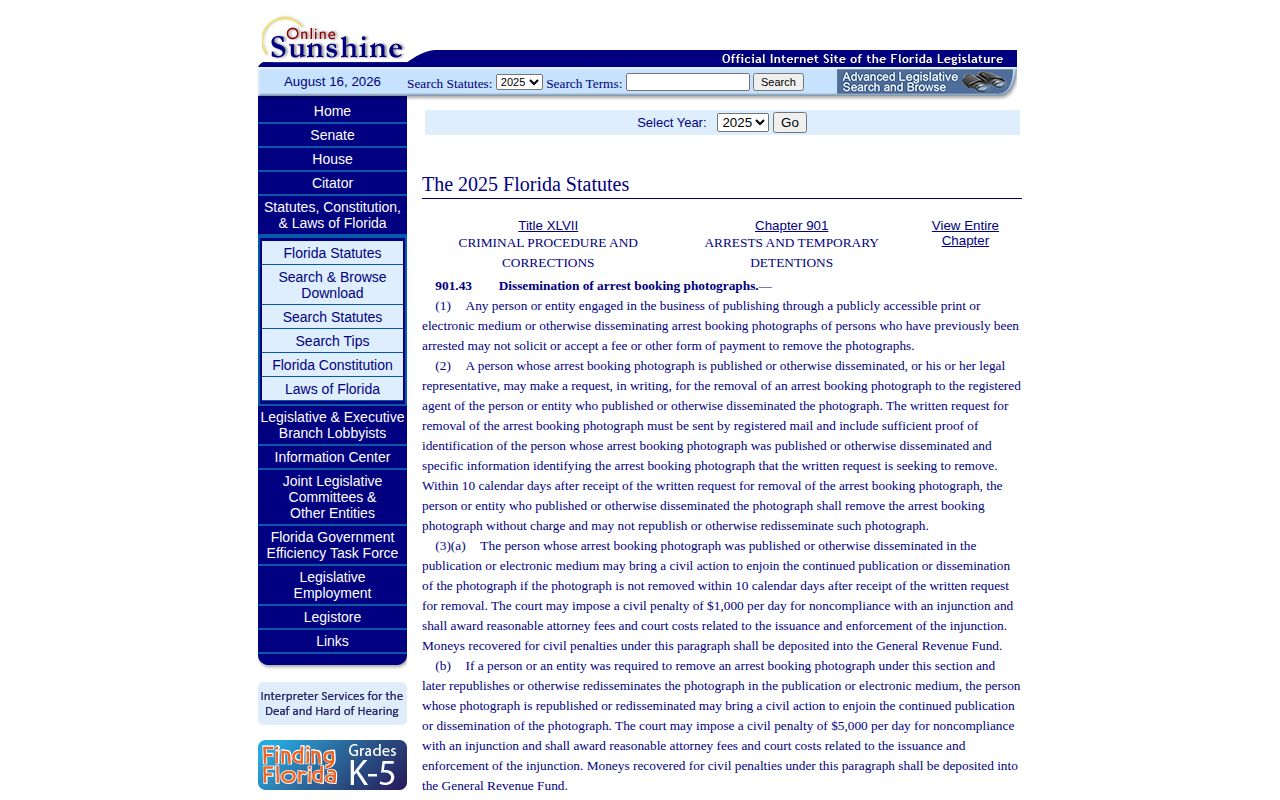
One point the source makes clear: commercial removal rules stand apart from a request to CCSO, sealing, expunction, or a court disposition. They run on separate tracks.
Clay County Sealed Mugshot Forms
Sealing and expunction are court processes, not web takedowns. The FDLE seal and expunge process starts with an eligibility application. A Certificate of Eligibility is only step one. Relief takes effect through the proper court order and FDLE's processing of that certified order. Eligibility hinges on the full criminal history, the disposition, supervision, offense category, and any prior relief.
After FDLE review, the Clay Clerk's seal and expunge forms supply local petitions, affidavits, and proposed orders. Sealing limits access to authorized parties. Expunction generally means destruction or obliteration, though a few statutory records may remain. Neither process guarantees that every independent copy disappears.
The Clerk's official form route is shown below.
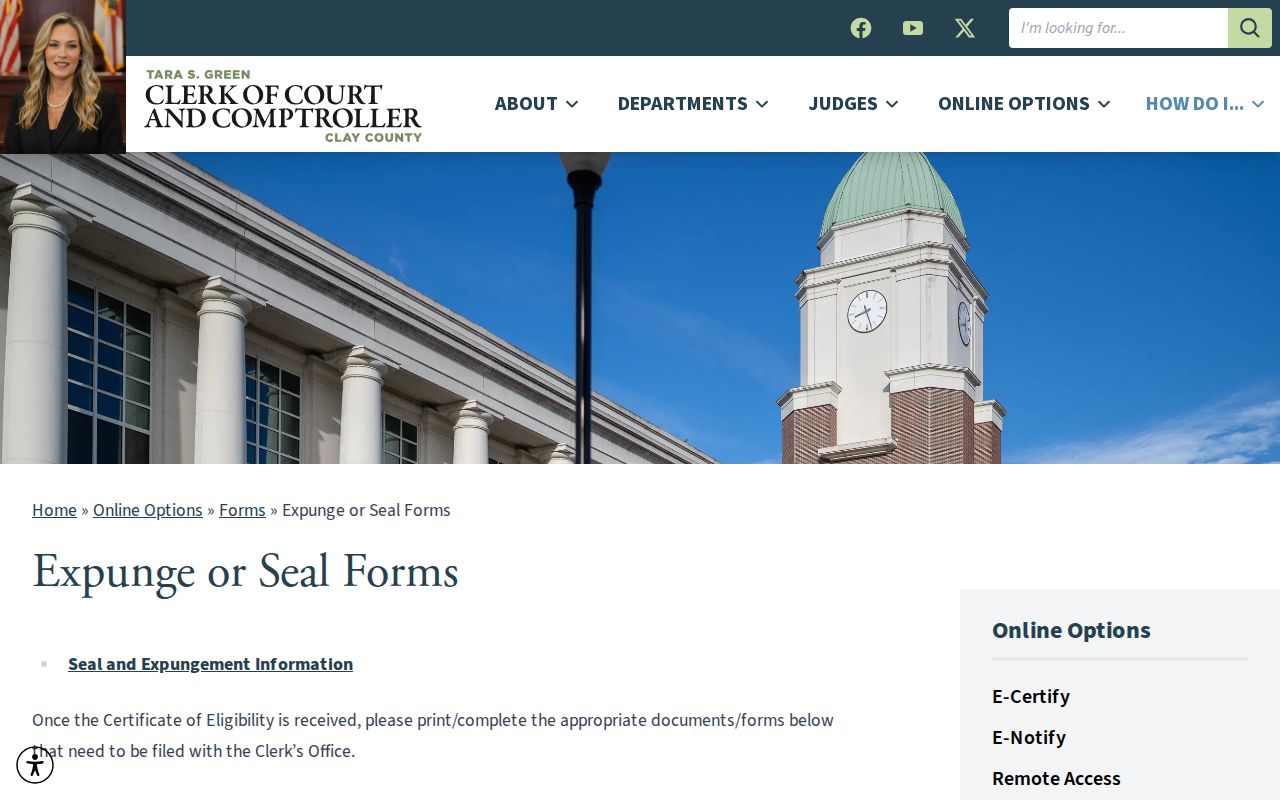
These forms are the reliable local path, but they don't decide who qualifies. For an individual eligibility question, legal advice may help.
Clay County Juvenile Arrest Privacy
Florida keeps juvenile records closed from the start. Statute 985.04 makes confidentiality the rule. Serious charges and court-approved disclosures can crack that door open a bit, though. Anyone claiming a juvenile file never becomes public is overstating the law. Expunction follows its own logic, hinging on the case type, the kind of record involved, and how old the person was at the time.
What about a name missing from an adult roster? That gap tells you nothing. Sealed juvenile files, expunged matters, protected victim data, and details tied to an open investigation can all sit out of public reach or show up heavily redacted. Treat a missing name, charge, or booking photo as a lead worth chasing further. It is not a final answer.
Old Clay County Booking Archives
Posting a booking record online and keeping it on file are two different things. Florida's GS2 retention schedule requires booking records and commitment-and-release lists to be kept at least one year after release. That is a floor. It does not force the P2C system to display a released booking for a year. It does not prove destruction on the anniversary. Nor does it stop CCSO from holding a record longer under another rule or a legal hold.
Start with whichever office created the record. CCSO holds the booking sheet and photo. Municipal departments keep their own incident reports. The Clay Clerk carries the court file. For older court material, call the Clay Clerk Historical Archives at 904-284-2386. The State Archives of Florida is a last resort, not a source for fresh arrests. Clay County has no dedicated booking-photo collection and no automatic transfer program.
A solid request names the person, the agency, an approximate date, the record series, and any booking or case number. Ask which retention schedule and item applied, whether the file was lawfully disposed of, and whether it moved to another custodian. Then pair any historical charge with a court-outcome check through the Clerk.
Find Clay County Busted Mugshots
A smart Clay County search runs in a set order. Check current custody first. Then look at older activity. Then chase down the court outcome. CCSO's Crime and Arrest Information gateway anchors the official side of that hunt. Two separate P2C tools hang off it. Each answers a different question in a busted mugshot search.
- Choose Inmate Information to check whether the person is shown in Clay County Jail now. Search by the live fields and open the detail.
- Choose Arrest Information when the person is not on the current roster or the need concerns an earlier event. Use available name and date controls.
- Look for a booking photo on the individual record. If no image appears, request the booking sheet and photograph from CCSO Public Records.
- Search the Clay Clerk criminal docket with the case number or carefully matched name to learn what was filed and how the case ended.
- Use FDC, BOP, or ICE only when the person's custody moved to the specific state, federal, or immigration system those tools cover.
Spelling sinks more searches than privacy does. Run every plausible variant: aliases, hyphens, spaces, compound surnames. Confirm the arrest truly happened in Clay County, since borders matter here. One person can carry multiple bookings and photos, so line up the booking number, date, agency, and case identifier before treating two results as one event. The official CCSO gateway is shown below.
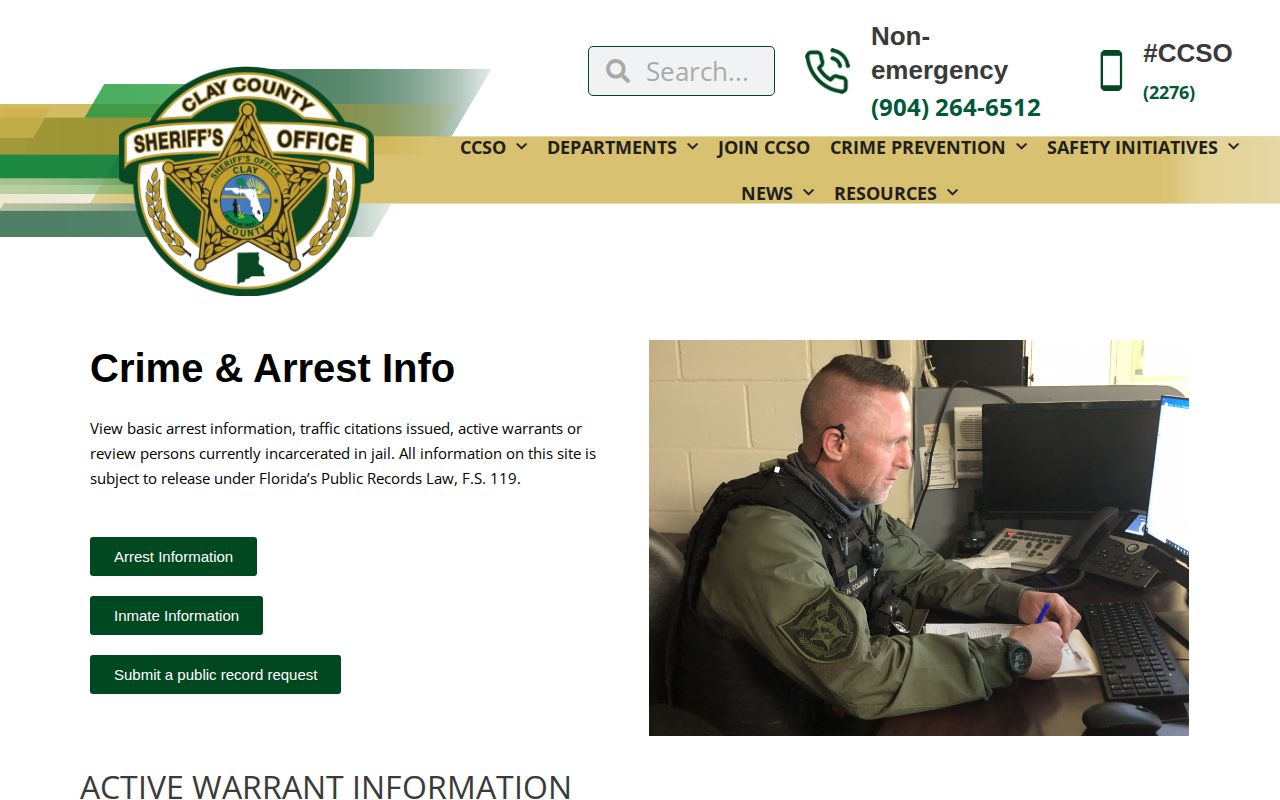
Notice the gateway splits these into separate links. That split matters. A current roster check and a prior-arrest search answer different questions. Blend them and you will chase the wrong trail.
Clay County Busted Roster Search
The P2C inmate catalog tracks current county detention and nothing else. CCSO posts no fixed refresh schedule. It makes no promise about how long a released entry stays visible. Jot down whatever timestamp the screen shows. If urgent custody information conflicts with what you see, call the Clay County Jail at 904-529-5905.
| Search or detail field | How to use it |
|---|---|
| Name or visible filter | Begin with surname, then test spelling variants supported by the live interface. |
| Identity descriptors | Compare age or birth information, sex, race, and aliases only when displayed. |
| Booking details | Save the arrest date, booking number, agency, and facility for later matching. |
| Charge and bond rows | Read as intake data that can change by prosecutor or court action. |
| Booking image | May appear on a person record; absence does not prove an intake photo does not exist. |
Click into a result rather than trusting the summary tile. The roster only tells you whether someone was in custody at the moment you checked. A vanished entry might mean release. It might mean a transfer, a correction, or a routine refresh. The system alone cannot say which. It cannot name a release time either. The official current-custody interface is pictured below.
Treat the interface as a live operational view, not an archive. If access fails or the event has aged out, a focused records request to CCSO remains the dependable fallback.
Recent Clay County Busted Bookings
CCSO's Arrest Information link opens the P2C Daily Bulletin. It reaches arrest events even after the people involved have left the jail. No official 24-hour, 72-hour, or weekly booking page exists. There is no permanent feed archive either. Only the live date control sets the available window.
For a single day, set start and end to the same local date if the interface allows it. For longer stretches, pick a bounded range the controls accept, and write down the dates you used. A late-entered arrest can surface after its day has passed. Event counts never equal the number of people still confined. CCSO publishes no verified weekend surge schedule, so do not infer one. The P2C arrest and event interface carries the official date controls shown here.
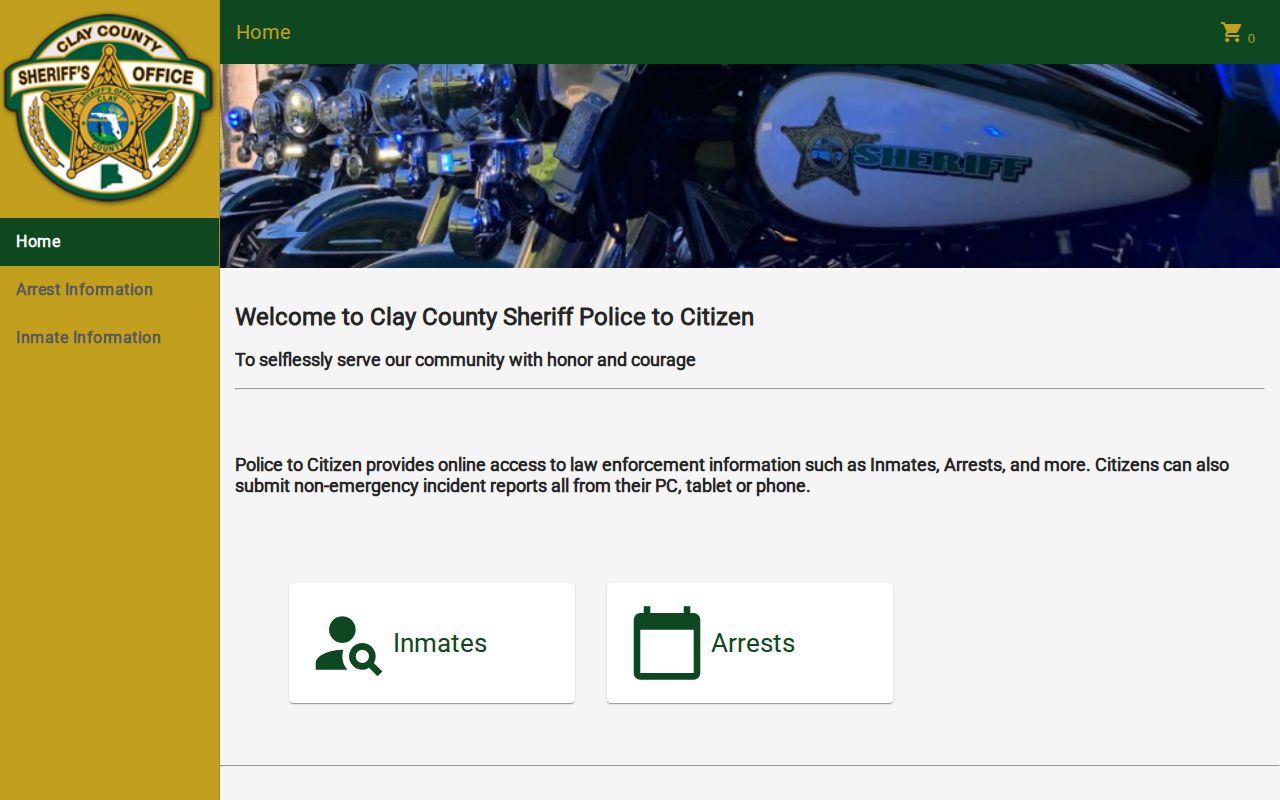
Dates outside the available range still have a path. Request the booking record from CCSO, then match it to the court case at the Clay Clerk.
Note: Current custody and arrest activity are separate Clay County views, and neither screen supplies the final court disposition.
Clay County Arrest Apps Differ
A phone can help with Clay County arrest info, but only if you grab the right app. SaWatch's counterpart, SaferWatch, is a tip tool. CCSO rolled it out with school agencies and Green Cove Springs Police to gather non-emergency reports and push safety alerts. It won't show you a booking photo. The official OCV Clay County Sheriff's Office app focuses on news, tips, reporting, and safety content too. Its store description promises nothing about inmate images.
Fugitive Friday is another animal entirely. That weekly series publicizes wanted people on social media. It is not a list of who got busted overnight. For booking and custody records, the sheriff-linked P2C web portal remains the authoritative source. One warning applies before you install anything: if an app carries a county-sounding name, check the developer, the agency address, and the linked website first.
Clay County Release Record Alerts
Custody status can change fast. VINE and VINELink will tell you the moment it does, for free and in confidence. Alerts come by phone, email, or text. Enter the person's first and last name, choose your alert method, and register. Stuck anywhere in the process? Call 877-846-3435 for help.
That beats refreshing the Clay County roster all day. Still, VINE has limits. It won't explain why a status changed. It isn't the court docket either. Think of VINE, SaferWatch, and the OCV sheriff app as separate tools with separate jobs, not copies of one another.
Where Clay County Busted Photos Appear
Official sources come first. Secondary publishers do have their uses, such as pinning down a date or a tricky spelling. But they lag behind real-time data. They list the same person twice. A release may slip past them, or stale labels can linger after the court case has moved on. Treat their county landing pages as discovery aids, not confirmation.
| Channel | Photo | Status and use |
|---|---|---|
| CCSO P2C inmate detail | May appear | Official current county custody; check the individual record. |
| CCSO P2C arrest information | Interface-dependent | Official arrest activity within the live date range. |
| CCSO Public Records | Requestable | Official fallback for a booking sheet or photograph. |
| Florida Department of Corrections | Commonly shown | Official state prison or supervision profile, not a recent county feed. |
| Clay Clerk docket | Not a mugshot source | Official filings, court events, and disposition. |
| Clay Today | Some stories | Local journalism with selective weekly and event-driven coverage. |
| Busted Newspaper, Recently Booked, Arrests.org, Mugshots.zone, Mugshots.com | Often | Unofficial county pages that may be stale, incomplete, duplicated, or wrong. |
The verified county pages include Busted Newspaper Clay County, Recently Booked Clay County, Arrests.org Clay County, Mugshots.zone Clay County, and Mugshots.com Clay County. Whatever one of these pages shows, check CCSO custody and the Clay Clerk docket before treating its label as settled.
Clay County State Offender Photos
The Florida Department of Corrections Offender Search covers a different crowd than the jail roster. Its database holds sentenced state prisoners, some people under state supervision, and certain former offenders. Someone arrested days ago in Clay County won't be there. Neither will anyone held only before trial. When a person does appear, the profile usually carries an offender photo, current status, physical descriptors, custody or supervision details, and offense and sentence information.
A six-character DC number lets you search directly. Without it, run the name and try spelling variants. To avoid matching a stranger, compare the full name, age or birth data, sentencing county, and offense dates against the Clay Clerk case. Remember that the FDC image comes from state corrections, so it may differ from the Clay County intake photo.
The official FDC search form is shown below.
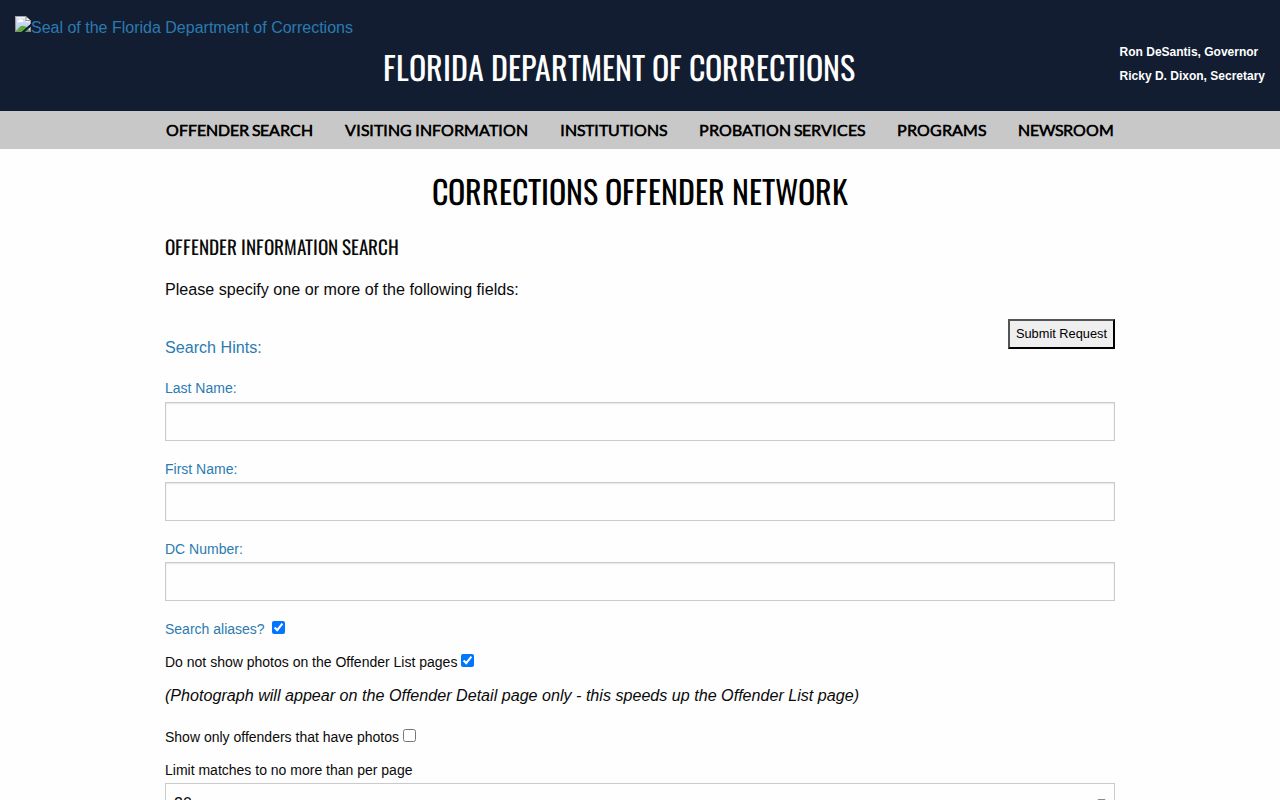
Want a sharper photo or one from an earlier date? Route that request to FDC rather than CCSO. Give them the person's full name plus the DC number. That pairing lets staff pull the correct file without any delay.
Clay County Arrest Record Locations
Where you search depends on where the person sits in the system. Records migrate. County intake can give way to release, state prison, federal custody, or another system entirely. The catch is that these databases don't all update on the same clock.
- Just booked or recent arrest
- Use P2C Arrest Information. A result does not prove the person remains jailed or will be prosecuted as booked.
- In Clay County custody now
- Use P2C Inmate Information and the jail. The result is not a permanent record or final case outcome.
- Released or transferred
- Use P2C arrest search, a CCSO request, and the Clerk. Roster absence does not explain why the person left.
- Sentenced to Florida custody
- Use FDC Offender Search. An FDC profile is not a fresh Clay County booking.
- Federal custody
- Use the BOP Inmate Locator. Its public results contain no image field.
- Immigration detention
- Use the ICE Online Detainee Locator. It is not a county arrest record or mugshot source.
Federal searches split along population lines. The BOP locator reaches federal inmates held from 1982 onward. A separate tool, the ICE locator, finds certain adults held in immigration custody. It skips anyone under 18. Neither source replaces the CCSO booking system for Clay County arrests, so treat them as supplements rather than standbys.
Clay County Busted Court Follow-Up
Clay Clerk builds the bridge from the jailhouse to the courtroom. Its online-services page includes a way to watch or listen to first appearances live. That hearing covers release conditions and counsel, among other things. It won't serve as a mugshot archive. The docket that follows shows what prosecutors filed and how the court responded.
Search the Clay Clerk criminal case portal with the P2C case number when you have it. A plain name search can pull up strangers. Match dates, court division, and charge details before trusting a result. Then read the final order or event itself, because the wording matters. Adjudication withheld is not a dismissal. Case closed is not a clear disposition, and a bond is not an outcome.
The Clerk's first-appearance access instructions are pictured below.
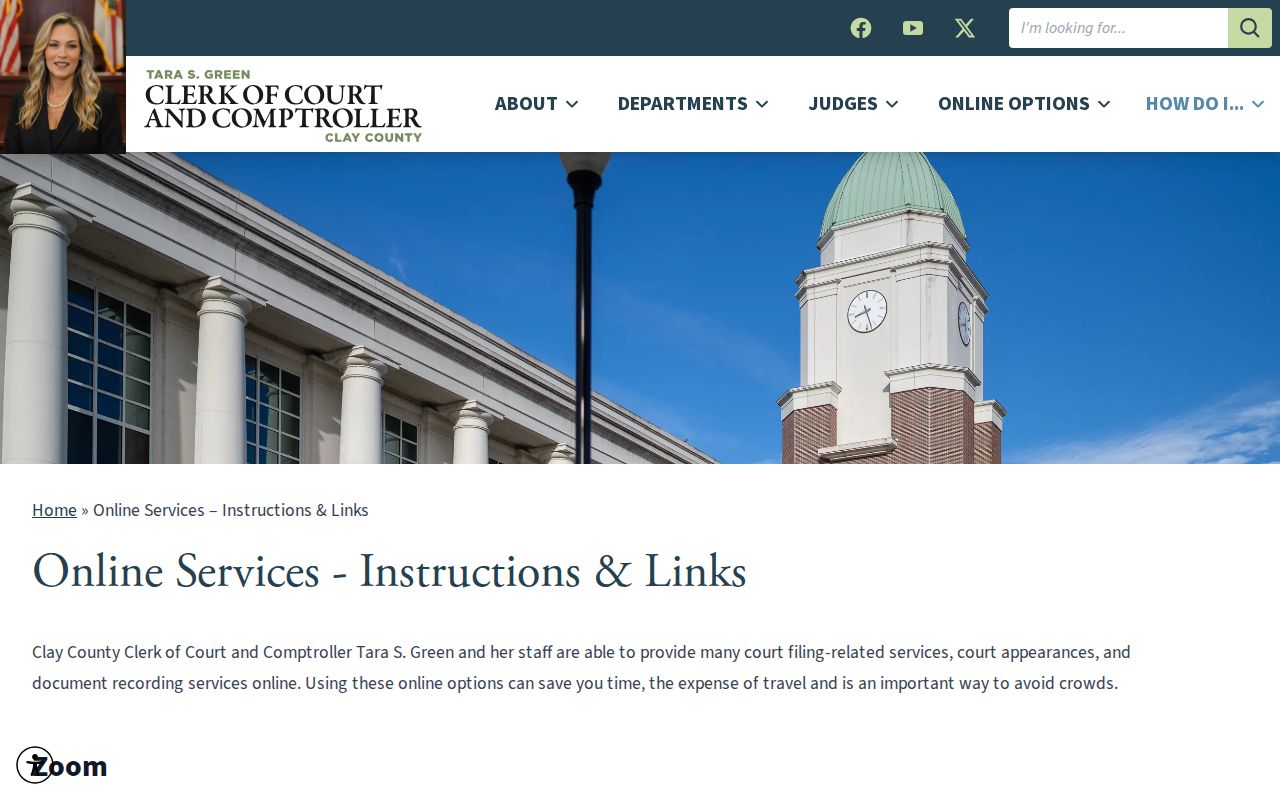
Booking charges shift often, and the court disposition is where the legal story truly ends.
Busted Mugshots Across Clay County
Different agencies make the arrests. Detention follows one central path. The city pages walk through that handoff step by step. They also steer you away from a common mistake, since a mailing address proves nothing about which police force holds jurisdiction.
- Green Cove Springs Busted Mugshots covers city police reports and the separate CCSO booking record at Clay County Jail.
- Orange Park Busted Mugshots covers Town of Orange Park Police records before the CCSO custody and booking step.
- Keystone Heights Busted Mugshots follows CCSO directly because the city has no separate police department.
Which office handled an event? Three records settle it. The arresting-agency field comes first. Then the incident report. Then the court case. Every city route funnels back to the same two places, with CCSO answering for current county custody and Clay Clerk holding the disposition.